
About
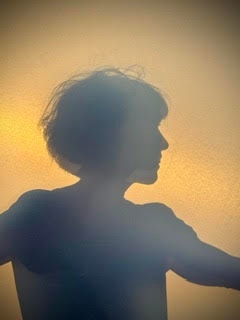
Tracy Shankle
A lifelong fascination with light — from childhood wonder to photography to sculpture to profession and back to photography again.
Thirty years of wonder
The photographer
Most photographers learn to see light. I spent twenty-four years learning how light works.
Where It Begins
A Lifelong Fascination
Before photography. Before lighting design. Before any of it — there was Lite-Brite, my Glow Worm glowing softly in the dark. Analogue times when you could lay on the floor and watch the rainbow of Christmas lights twinkle on the ceiling, shifting the shadows of the pine branches. A stadium was transformed with Ice-capedes flashlight souvenirs. My 3 color temperature makeup mirror (left an impression). Luminous experiences. A felt sense of light. I am fare-skinned (burn), and have always been sensitive to & moved by Light. Clarity wonder and delight. The way light transforms ordinary things into something worth looking at.
That fascination never left. It just found larger and larger containers.
The Origin
Gallery234, Buffalo
2002
In 2002, a solo exhibition at Gallery234 in Buffalo featured ten original decorative light fixtures — designed, built, and shown as sculpture. The name SHANKLEVISION came from that show, a nod to Wonkavision: the idea that vision itself could be a medium, that light could be a character rather than a condition.
That exhibition sits at the center of a longer arc. Photography came first — studied formally, then set aside when architectural lighting became the work. Twenty-four years of designing, specifying, and teaching light. Now the camera is back in hand, but the eye that holds it has spent a lifetime learning exactly what it is looking at.
Light is the subject. Architecture is the context. The experience of a space — how it feels to stand inside it, how illumination shifts through the day, how materials reveal themselves under different conditions — that is what I photograph.
Most photographers learn to see light. I spent twenty-four years learning how light works — how sources behave, how they interact with surfaces, how they shape the emotional character of a space. That knowledge is not incidental to the photography. It is the photography.
In 2025, I presented Capturing Light for the Illuminating Engineering Society of Boston — a conversation about the relationship between lighting design and photography, and how the camera can serve as evidence of the experience of illuminated space.
IES 2025
Capturing Light
A presentation on the relationship between architectural lighting design and photography — how the camera reveals what the eye adapts to, and how photography can serve as evidence of the experience of light.
Work Together
For commissions, licensing, and project inquiries.